
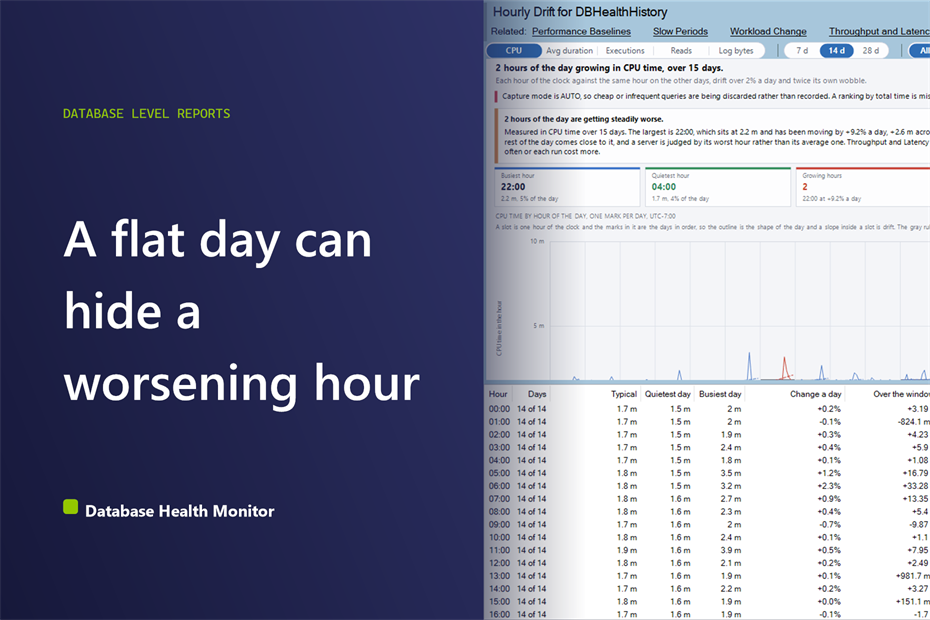
Which Hour of the Day Is Slower Than It Used to Be?
Which hour of the day is slower than it used to be? Sort Query Store history by hour and read each hour’s level and slope… Read More »Which Hour of the Day Is Slower Than It Used to Be?
Which hour of the day is slower than it used to be? Sort Query Store history by hour and read each hour’s level and slope… Read More »Which Hour of the Day Is Slower Than It Used to Be?
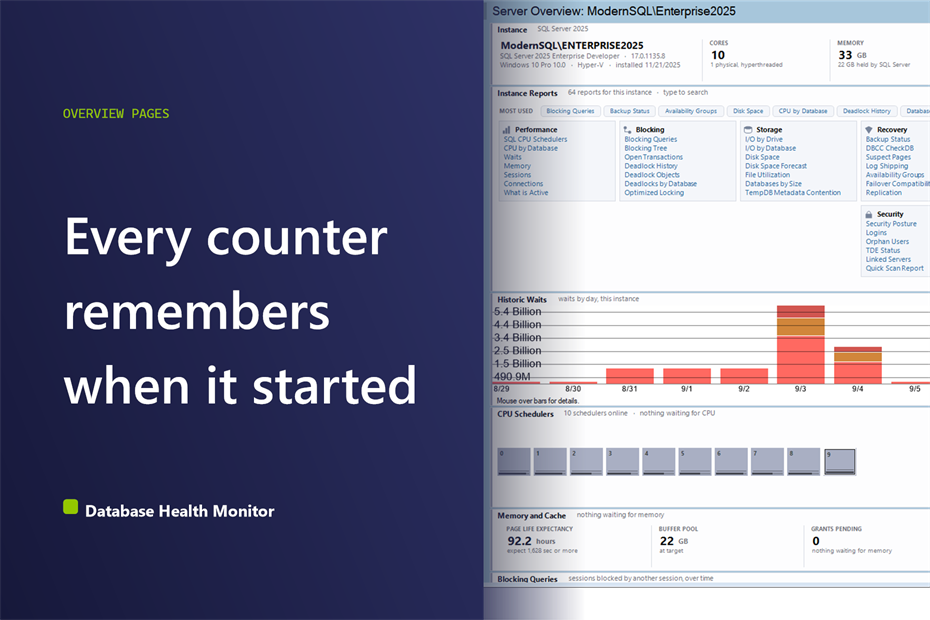
A SQL Server overview is built from DMVs that reset, accumulate and exclude things. Here is what each number counts, and what it quietly leaves… Read More »SQL Server Overview: The DMVs Behind Every Number
Some of the most costly SQL Server failures raise no error at all. Here are three of them, and how Database Health Monitor 4.1626 now… Read More »Three Quiet Failures Your Monitoring Probably Misses: Service Broker, Unprotected Columns and Analysis Services
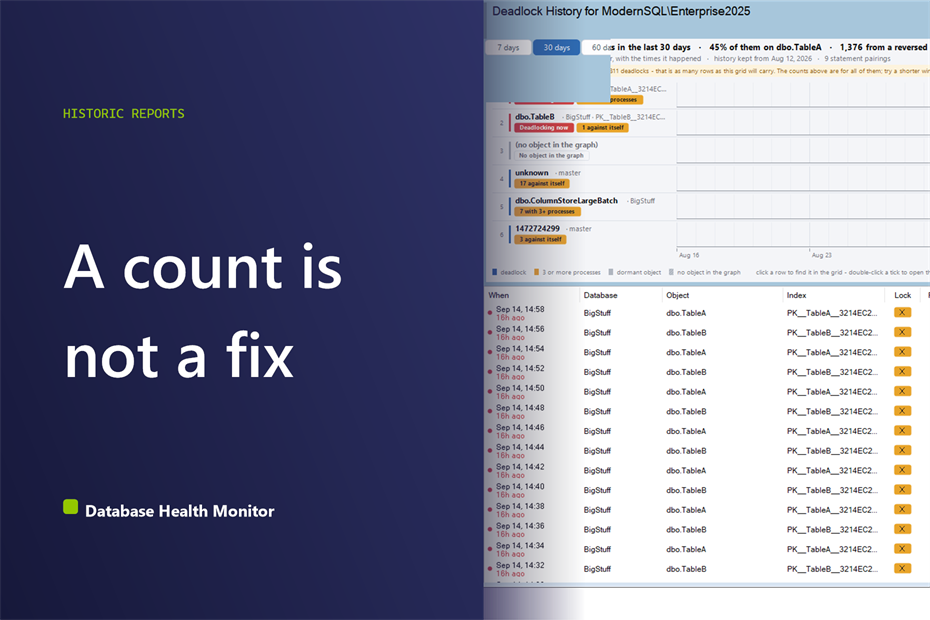
A deadlock count tells you there is a problem. SQL Server deadlock history grouped by object and statement pair tells you what to change. Here… Read More »SQL Server Deadlock History: Find What Collides
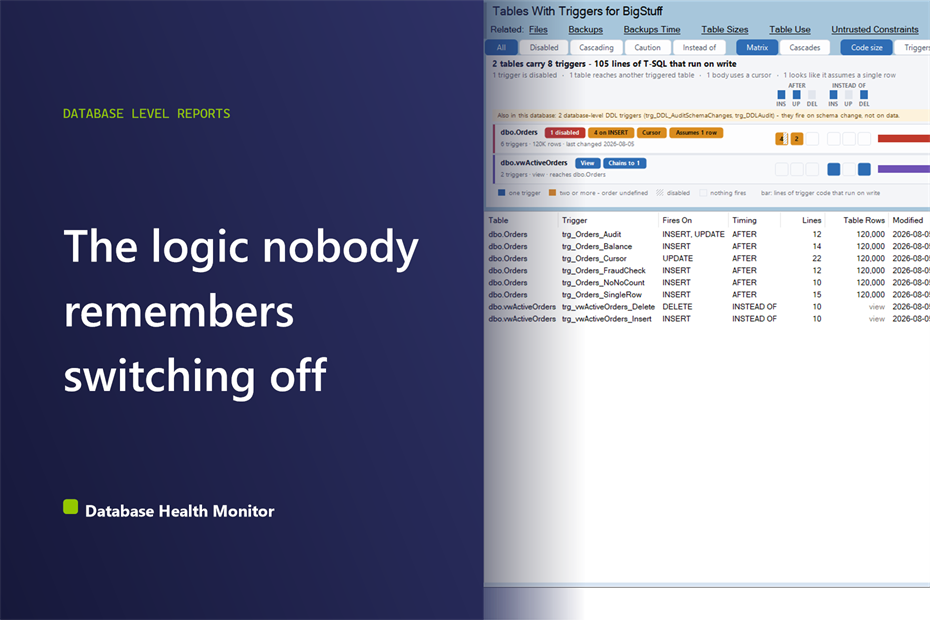
A write that is slow, deadlocks, or corrupts rows may be hitting SQL Server triggers nobody remembers. Here is how to see what fires, and… Read More »SQL Server Triggers: What Fires When Your Table Is Written
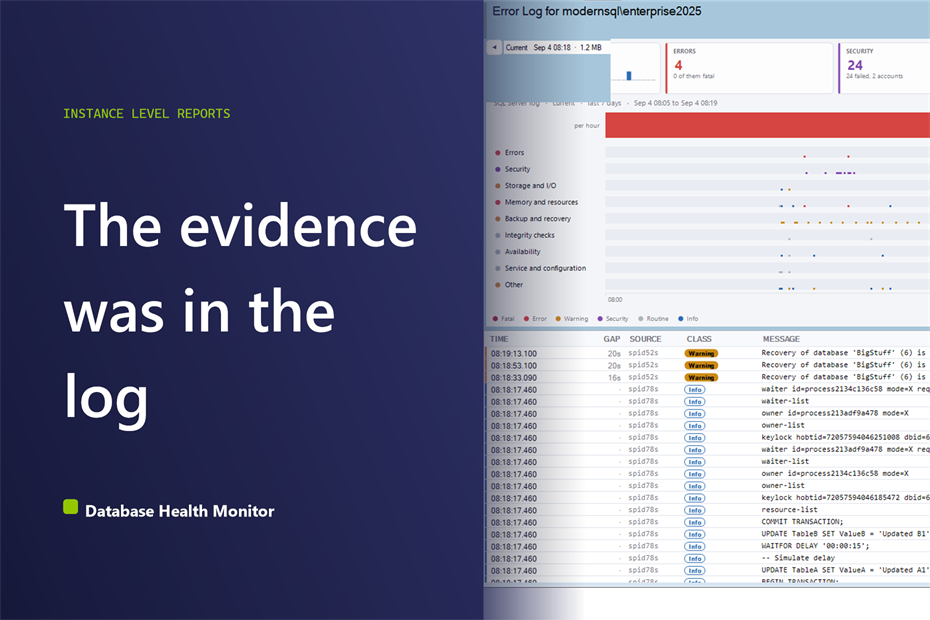
The SQL Server error log holds the evidence for your last outage. Here is how to read archives, group the noise, and spot 825 and… Read More »Reading the SQL Server Error Log Before It Reads You

Cost per database, unused Enterprise features, where personal data lives, whether servers can be consolidated, and what is about to run out. Database Health Monitor… Read More »The Questions Your SQL Server Estate Could Not Answer Until Now: Cost, Licensing, Sensitive Data and Risk
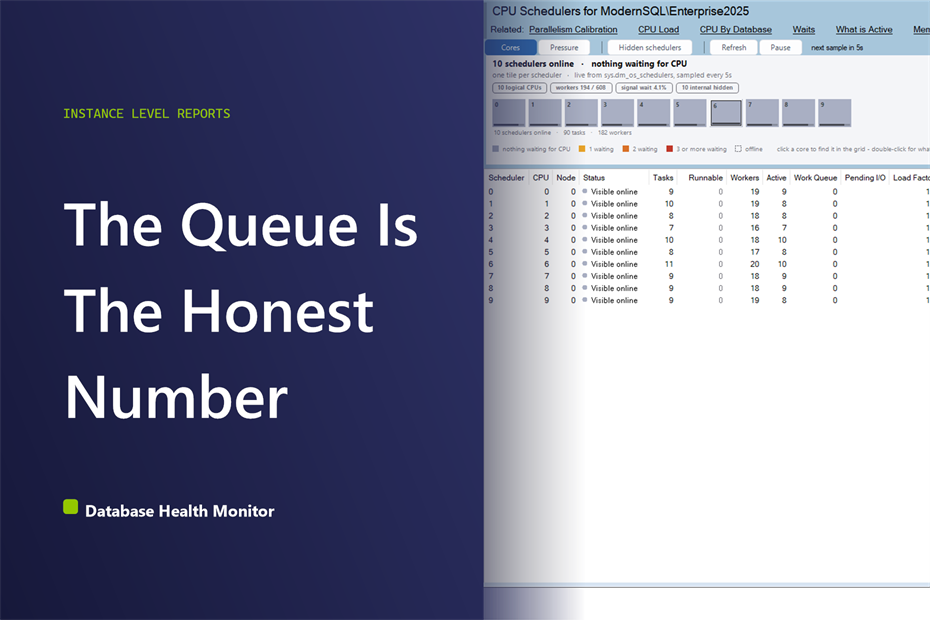
Task Manager’s CPU percentage hides real CPU pressure. Learn which SQL Server counter shows it and what a healthy loaded server actually looks like.
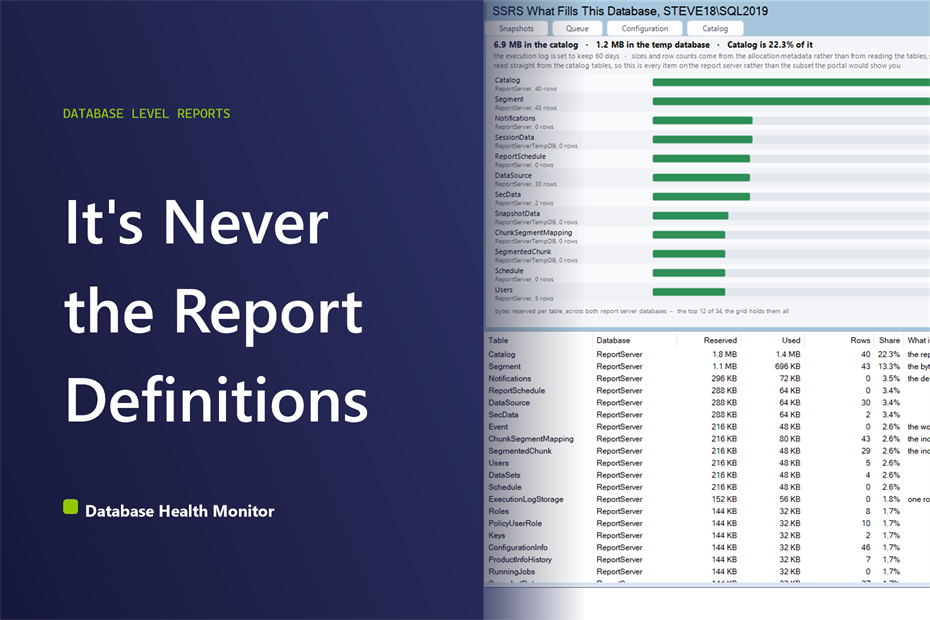
ReportServer database size rarely grows from report definitions. See which tables, in the catalog and its temp database, actually reserve the space.
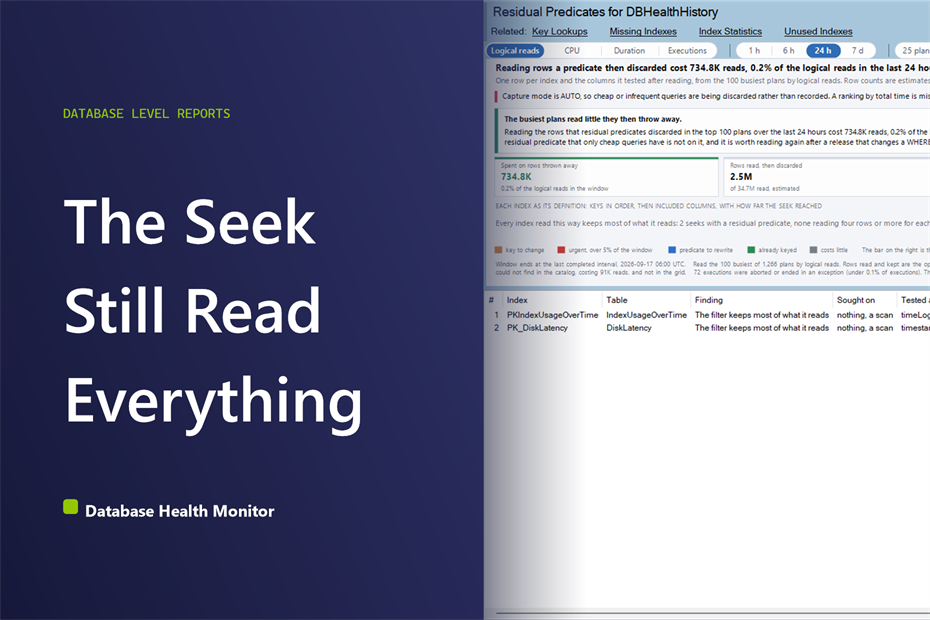
A SQL Server residual predicate lets an index seek report success while it reads and discards most of the rows it touched. Here’s how to… Read More »The SQL Server Residual Predicate Hiding in Your Plan