

What Uses tempdb in SQL Server?
If you’ve worked with SQL Server, you’ve likely heard of tempdb. It’s a system database that plays a critical role in the smooth operation of your SQL Server instance. But what exactly uses tempdb? This behind-the-scenes workhorse supports a variety of operations, from temporary storage to query processing. In this post, we’ll explore the key things that rely on tempdb and why it’s so essential.
Temporary Tables and Table Variables
One of the most obvious uses of tempdb is for temporary objects like local and global temporary tables (e.g., #TempTable or ##GlobalTempTable) and table variables (e.g., @TableVariable). When you create these objects, SQL Server stores their data and metadata in tempdb. While temporary tables are explicitly designed for short-term storage, table variables—though often lighter—also lean on tempdb for their operations, especially if they spill over due to memory pressure.
Query Processing and Spills
During query execution, tempdb often comes into play when SQL Server needs extra workspace. Operations like sorts, hashes, and joins can “spill” to tempdb if they exceed the allocated memory. For example, if a query involves a large ORDER BY or a hash join that can’t fit in memory, SQL Server uses tempdb to temporarily store intermediate results. This makes tempdb a critical component for Performance Tuning—poorly optimized queries can overload it.
Cursors and Triggers
Cursors, especially server-side Cursors, use tempdb to manage their state and hold result sets while iterating through rows. Similarly, certain triggers—particularly those with complex logic or that reference inserted/deleted tables—rely on tempdb to store transitional data. These operations might not always be obvious, but they quietly tap into tempdb‘s resources behind the scenes.
Snapshot Isolation and Versioning
If you’re using features like snapshot isolation or read-committed snapshot isolation (RCSI), tempdb gets involved to store row versions. These versioning mechanisms allow SQL Server to maintain consistency for readers while writers modify data. The version store in tempdb keeps track of these older row versions, which can grow significantly under heavy write workloads, making it a key player in concurrency management.
Other Features and Considerations
Beyond these, tempdb supports miscellaneous features like the rebuilding of indexes with the SORT_IN_TEMPDB option, temporary LOB (large object) storage, and even some internal SQL Server operations like DBCC checks. Since tempdb is shared across all databases and users on an instance, it’s a finite resource that can become a bottleneck if not managed properly. Optimizing its performance—through multiple data files, sufficient disk space, and monitoring usage—is crucial for a healthy SQL Server environment.
Understanding what’s using your TempDB and how it’s being utilized can be crucial for Performance Tuning and ensuring the smooth operation of your SQL Server. Always monitor and maintain your TempDB as part of your regular database administration tasks to prevent any potential issues related to its growth or contention.
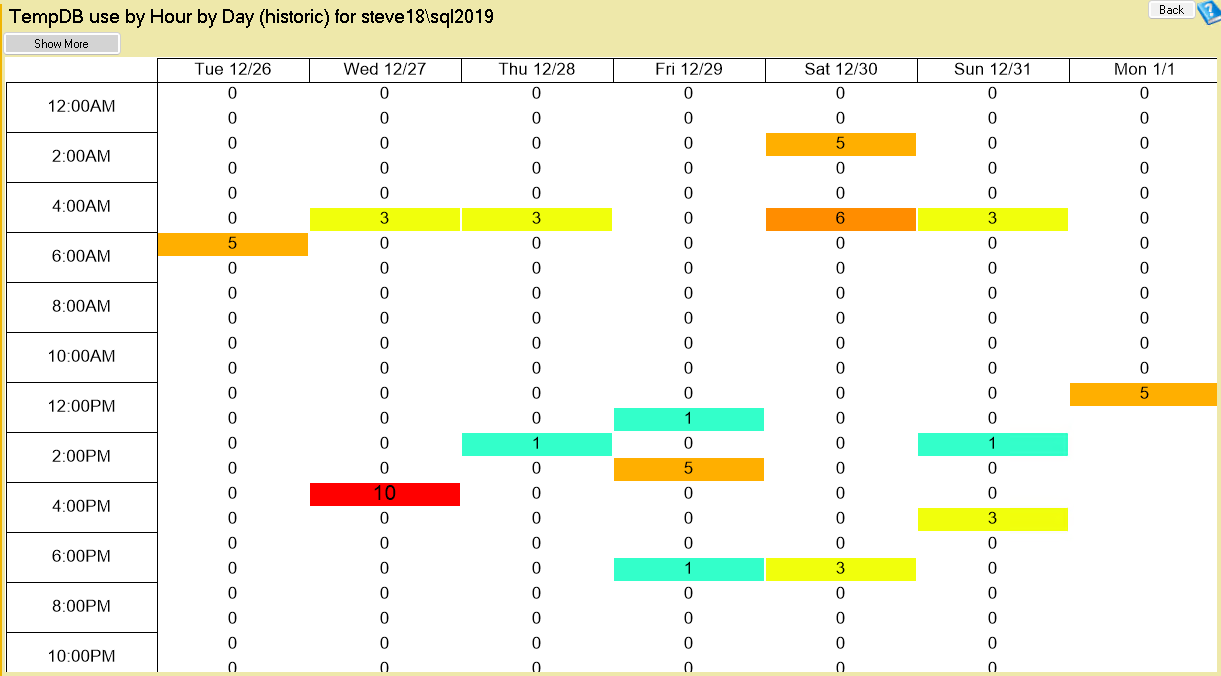
More information on what is using your TempDB here: https://databasehealth.com/server-overview/tempdb-use-by-hour-by-day-historic/.