Need help with this or anything relating to SQL Server? The team at Stedman Solutions can help. Find out how with a free no risk 30 minute consultation with Steve Stedman.
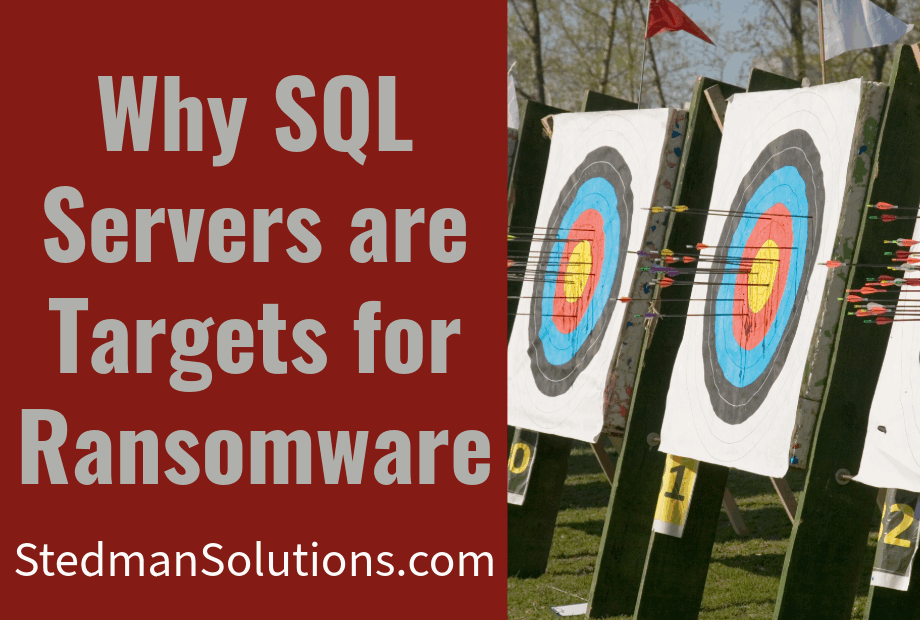
Why SQL Servers Are Ransomware Targets
SQL Servers store critical business data, making them prime targets for ransomware. Attackers exploit vulnerabilities to lock data and demand ransoms. This post explains why SQL Servers are at risk and how to protect them.
Here is a short video that was extracted from the Season 2 Episode 17 of the Stedman SQL Podcast.
Why SQL Servers Are Attractive Targets
SQL Servers are vulnerable due to:
1. Critical Data
SQL Servers hold customer records, financial data, and more. Encrypting this data disrupts operations, pressuring businesses to pay ransoms.
2. Unpatched Systems
Outdated SQL Server software or unapplied patches leave systems open to known exploits, allowing attackers to deploy ransomware.
3. Weak Credentials
Default or weak passwords, like “sa,” are easy targets for brute-force attacks or phishing, granting attackers access to encrypt databases.
4. Misconfigured Backups
Unprotected or untested backups stored on the same network can be encrypted or deleted, leaving no recovery option.
Impact of Ransomware Attacks
A ransomware attack on a SQL Server can cause:
- Operational downtime and lost revenue.
- Data loss or leaks if backups fail.
- High costs for recovery and potential fines.
- Reputational damage from breaches.
How Attackers Target SQL Servers
Attackers use:
- Exploits for unpatched vulnerabilities.
- Brute-forcing weak credentials.
- Lateral movement within networks.
- Targeting backups to prevent recovery.
Find out more about our SQL Server Managed Services
Protecting Your SQL Server
Defend against Ransomware with:
- Regular patching of SQL Server and systems.
- Strong, unique passwords and disabling default accounts.
- Secure, offline, and tested backups.
- Network segmentation and monitoring for suspicious activity.
Stedman Solutions’ Protection
Stedman Solutions’ SQL Server Managed Services provides:
- Continuous monitoring for threats.
- Timely patching to close vulnerabilities.
- Security hardening, including strong credentials and backup strategies.
Conclusion
SQL Servers are ransomware targets due to their critical data and common vulnerabilities like unpatched systems and weak credentials. Proactive security—patching, strong passwords, secure backups, and monitoring—can prevent attacks. Stedman Solutions‘ Managed Services help protect your SQL Server, keeping your data safe and your business running.
Need help with this or anything relating to SQL Server? The team at Stedman Solutions can help. Find out how with a free no risk 30 minute consultation with Steve Stedman. Stedman SQL Podcast Season 2 Episode 17 Ransomware.
In this episode of the SQL Server Podcast by Stedman Solutions, we take a close look at ransomware—a dangerous form of malware that encrypts your data and demands payment for its release. We explain how ransomware works, why it’s a growing threat to SQL Server environments, and what the real consequences are for businesses that aren’t properly protected.
- Watch Season 2 Episode 17 now.
- Visit Stedman SQL Podcast